

- Market Size (2026)
- USD 23.2 Bn
- Forecast (2036)
- USD 47.9 Bn
- CAGR (2026 to 2036)
- 7.5%
Skin Lightening Product Market Size, Market Forecast and Outlook By FMI
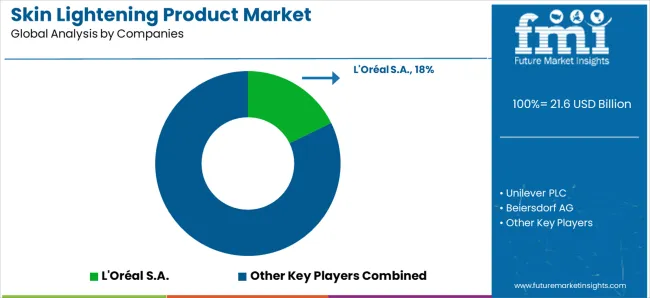
The skin lightening product market was valued at USD 21.6 billion in 2025. The market is predicted to reach USD 23.2 billion in 2026 and USD 47.9 billion by 2036 at 7.5% CAGR. Creams and Lotions are projected to account for 36.0% share in 2026. By end user, women segment is expected to represent 77.0% share in 2026.
Summary of the Skin Lightening Product Market
- Demand and Growth Drivers
- Rising concern over ingredient safety is strengthening market demand, as consumers increasingly seek skin lightening products that avoid harsh or controversial actives and align with evolving regulatory expectations.
- Daily skincare integration is sustaining adoption momentum, with skin lightening products becoming part of regular face‑care routines rather than occasional corrective treatments
- Wide availability through physical retail is reinforcing market growth, as supermarkets and beauty stores increase consumer exposure and encourage repeat purchasing through easy accessibility.
- Affordability considerations are expanding the buyer base, as consumers compare price with visible results, driving broader adoption of skin lightening products across mass‑market skincare.
- Product and Segment View
- Creams and Lotions are projected to lead the Product segment with 36.0% share in 2026 as daily application supports repeat buying.
- Women are expected to lead the End User segment with 77.0% share in 2026 with broad use across facial and body care.
- Economy is anticipated to lead the Price segment with 30.0% share in 2026 as mass brands compete on affordability.
- Retail Stores are projected to lead the Distribution Channel segment with 40.0% share in 2026 through supermarkets and beauty stores.
- Natural Ingredients are expected to lead the Ingredient Type segment with 45.0% share in 2026 as plant extracts support safer positioning.
- Geography and Competitive Outlook
- India is projected to record 7.4% CAGR by 2036 due to premium skincare and mass retail expansion.
- China is expected to expand at 7.0% CAGR by 2036 as domestic beauty retail supports active-led products.
- Brazil is forecast to grow at 6.8% CAGR by 2036 with strong beauty culture and pharmacy access.
- L’Oréal S.A., Unilever PLC and Beiersdorf AG hold broad product reach across mass and premium skincare.
- Analyst Opinion
- Rahul Pandita, Principal Analyst for Consumer Products at FMI says, "I view skin lightening products as a safety and trust business before it is a beauty business. Buyers are not leaving tone-evening products. They are moving away from unclear whitening claims and harsh ingredients. The winners will prove ingredient safety and visible spot correction in formats that people already use every day. Retail price pressure will stay high in India and Brazil. Compliance pressure will stay high in the United States and Europe. Clients should watch how brands replace hydroquinone with niacinamide, vitamin C and plant extracts while keeping claims simple enough for mass retail shelves."
- Skin Lightening Product Market Value Analysis
- Value is rising as tone-evening products shift from occasional treatment into daily creams and lotions.
- Premiumization supports the forecast as dermatology-style serums carry higher prices than basic mass creams.
- Regulation changes the value mix since safer active systems cost more to formulate and verify.
- Online channels raise product comparison pressure which forces brands to explain ingredients and claims clearly.
- Mass retail keeps the economy tier relevant as buyers want visible benefit without clinical pricing.
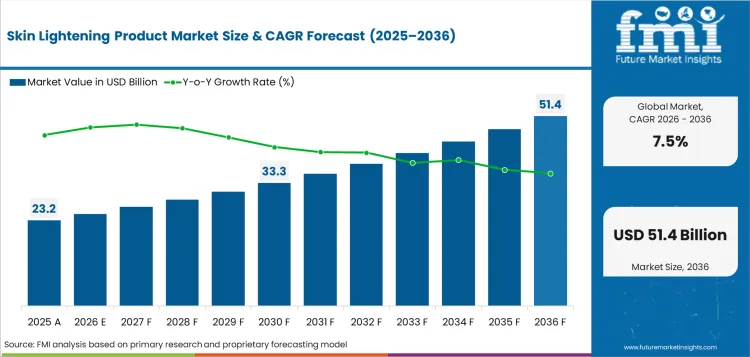
Key Takeaways
| Metric | Value |
|---|---|
| Market Size (2025) | USD 21.6 Billion |
| Market Size (2036) | USD 47.9 Billion |
| CAGR (2026–2036) | 7.5% |
| Incremental Opportunity (2026–2036) | USD 24.7 Billion |
| Leading Product Type (2026) | Creams And Lotions |
| Creams And Lotions Share (2026) | 36.0% |
| Leading Women (2026) | Women Segment |
| Women Segment Share (2026) | 77.0% |
| Fastest-Growing Country | India |
| India CAGR | 7.4% |
| Leading Nature (2026) | Natural Ingredients (>45.0%) |
Skin lightening products are moving away from risky legacy ingredients. In April 2026, the FDA said OTC hydroquinone skin lighteners are unapproved drugs. FDA testing also found mercury as high as 15,900 ppm in listed products. This is expected to push brands toward safer labeled actives. EU rules are also shaping formulation limits. Regulation (EU) 2024/996 cites kojic acid safety up to 1% in cosmetic skin lightening use. That makes dosage control part of product design. Multi-active brightening is gaining commercial value. Hsin et al. tested tranexamic acid, niacinamide and vitamin C for 8 weeks in 2024. The study reported a 13% reduction in color intensity. This supports gentler dark-spot regimens for mainstream skin care.
Skin Lightening Product Market Definition
The sector covers topical products sold for tone evening, dark spot care and visible brightening. Included products cover creams, lotions, serums, masks, cleansers, peels and exfoliators sold through retail stores, pharmacies and online channels. The scope also considers adjacent formats such as solid skin brightening sticks and dull skin treatment products when they carry tone-evening claims. Prescription-only dermatology drugs, oral whitening supplements, professional laser procedures and illegal mercury-added products are outside this study.
Skin Lightening Product Market Inclusions
The study includes creams and lotions, serums, masks, cleansers, peels and exfoliators, women users, men users, economy products, mid-range products, premium products, retail stores, pharmacies, online channels, natural ingredients, synthetic ingredients, vitamin C, niacinamide, kojic acid, alpha arbutin, plant extracts and global geography.
Skin Lightening Product Market Exclusions
The study excludes prescription-only hydroquinone products, oral glutathione supplements, laser pigmentation procedures, injectable treatments, illegal mercury-added products and unrelated makeup products that only provide temporary coverage.
Skin Lightening Product Market Research Methodology
- Primary Research: FMI analysts reviewed skincare brand managers, beauty retailers, dermatology channel participants and ingredient suppliers. Interviews focused on product claims, price tiers, channel mix and buyer response to safer actives.
- Desk Research: The desk review used regulatory sources, dermatology safety guidance, public company releases and ingredient safety references.
- Market Sizing and Forecasting: The forecast combined user-provided market anchors with FMI country demand scoring. The model checked skincare retail depth, ingredient regulation, channel access and price tier movement.
- Data Validation: Final values were checked against skincare product portfolios, beauty retail signals and public safety actions. Segment shares were cross-checked with format use patterns and product shelf visibility.
Why is the Skin Lightening Product Market Growing?
- Dark spot correction is moving into everyday skincare as consumers want tone-evening benefits without medical visits.
- Retail buyers are favoring brands that can explain active ingredients in plain language on packs and online pages.
- Ingredient safety pressure is pushing brands away from mercury and illegal hydroquinone claims toward safer alternatives.
- Beauty stores and pharmacies are widening access to serums that support visible pigmentation care at home.
- Men’s grooming products are adding targeted brightening claims in markets where oil control and face care overlap.
Regulatory pressure is reshaping the category toward safer claims and cleaner ingredient lists. In May 2024, the United States Food and Drug Administration said over-the-counter skin lightening products containing hydroquinone or mercury are illegal. This changes the shelf test for brands and retailers. Products must show visible tone-evening benefit without relying on banned or prescription-only actives. Suppliers with niacinamide, vitamin C and alpha arbutin systems gain a stronger selling point. The forecast benefits from safer substitution rather than simple category expansion.
Online selling is making product safety harder to police and more important for trusted brands. This shows that risky products can travel across borders through small sellers and informal channels. Large brands gain an advantage when buyers seek traceable ingredients and clear labels. Retailers also have stronger reason to favor listed suppliers with tested formulas. That supports steady demand for branded creams and serums.
Market Segmentation Analysis
- Creams and Lotions are projected to account for 36.0% share in 2026 as face creams stay central to daily application.
- Women are expected to represent 77.0% share in 2026 with daily skincare and targeted solutions driving use frequency.
- Economy products are anticipated to hold 30.0% share in 2026 as mass retail buyers compare price per pack.
- With supermarkets and beauty stores shaping repeat buying, Retail Stores are projected to hold 40.0% share in 2026.
- Natural Ingredients are expected to capture 45.0% share in 2026 as plant extracts support safer product stories.
The skin lightening product market is segmented by product, covering creams and lotions alongside serums, masks, cleansers, peels and exfoliators. It is further segmented by end user, price, distribution channel and ingredient type. Creams and lotions are projected to keep the clearest share position as daily facial use supports repeat buying. Natural ingredients are expected to hold the ingredient lead as brands reposition tone-evening claims around safer actives and plant extracts.
Skin Lightening Product Market Analysis by Product
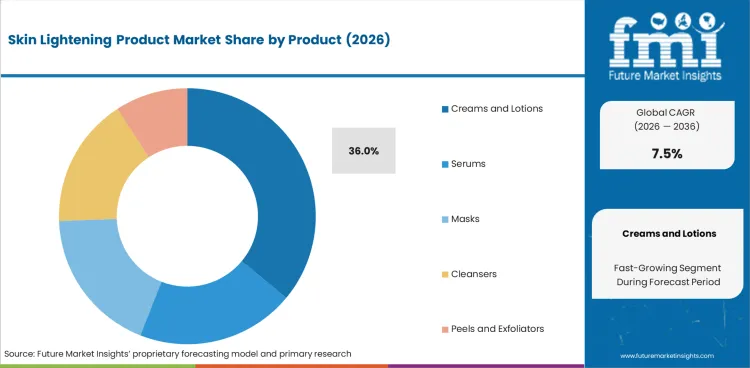
- Creams and Lotions are projected to account for 36.0% share in 2026 as face creams and body lotions support daily use.
- Serums gain shelf space as vitamin C and niacinamide formats offer a stronger story for dark spot care.
Insights into Serums Segment
- Vitamin C serums attract premium buyers who want a lighter format for morning routines and targeted pigmentation care.
- Chemical-based serums face tighter label checks when hydroquinone claims appear outside prescription pathways.
Skin Lightening Product Market Analysis by End User
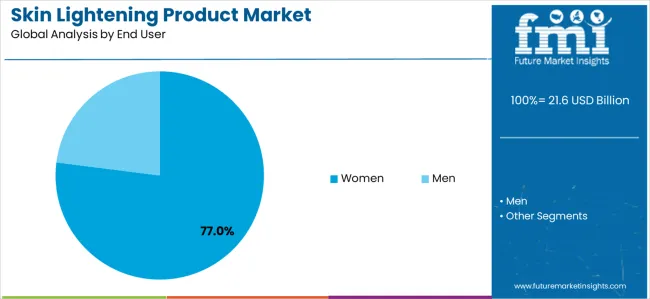
- Women are expected to account for 77.0% share in 2026 as facial tone-evening routines remain heavily female skewed.
- Men gain gradual traction through grooming products that combine oil control with visible tone improvement.
Insights into Men Segment
- Men’s products sell best when brightening is framed as grooming and blemish control rather than fairness.
- Barbershop retail and online grooming stores can support adoption in South Korea and India.
Skin Lightening Product Market Analysis by Price
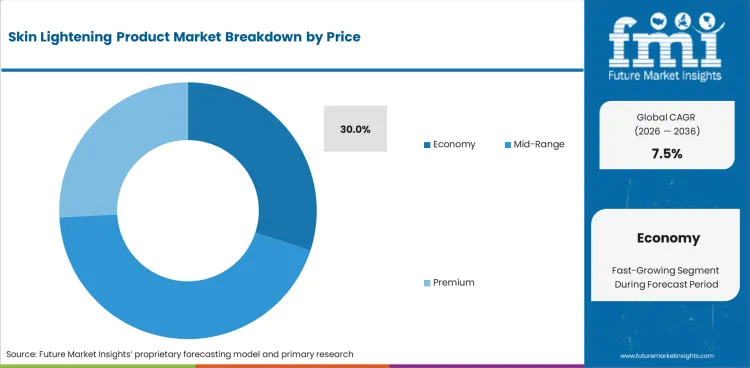
- Economy products are projected to represent 30.0% share in 2026 as mass buyers prioritize pack price and access.
- Premium products gain from dermatology-style ingredients and clinical language used by brands in pharmacy channels.
Insights into Premium Segment
- Premium buyers pay for stronger ingredient proof and packaging that explains benefit without harsh whitening claims.
- Brands with serum lines can lift average price even when cream formats keep higher volume.
Skin Lightening Product Market Analysis by Distribution Channel
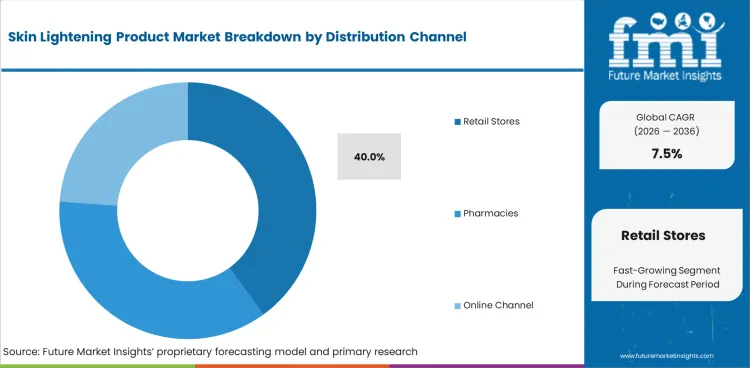
- Retail Stores are anticipated to hold 40.0% share in 2026 as supermarkets and beauty stores support repeat product discovery.
- Online channels are expanding as buyers compare ingredient lists and peer reviews before choosing brightening products.
Insights into Online Channel Segment
- Brand websites and e-commerce platforms give smaller brands a way to explain actives with more detail.
- Online selling also increases compliance risk since informal sellers can list unsafe products across borders.
Skin Lightening Product Market Analysis by Ingredient Type
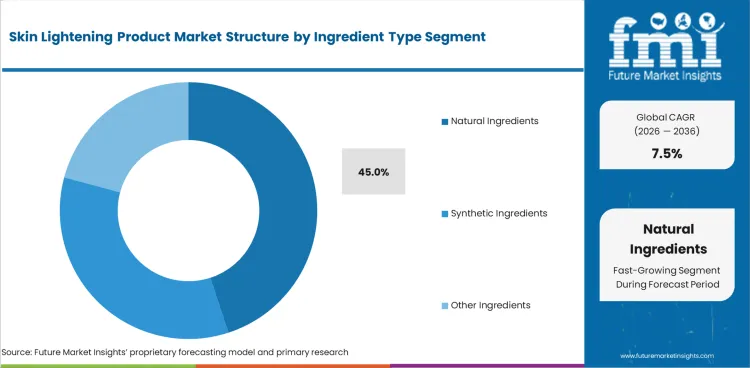
- Natural Ingredients are projected to account for 45.0% share in 2026 as plant extracts support lower-risk positioning.
- Synthetic ingredients stay important when brands need controlled potency and stable delivery in serums.
Insights into Synthetic Ingredients Segment
- Niacinamide and kojic acid support targeted tone-evening formulas when brands need clear active claims.
- Hydroquinone-based products remain constrained in over-the-counter channels due to prescription and safety controls.
Skin Lightening Product Market Drivers, Restraints, and Opportunities
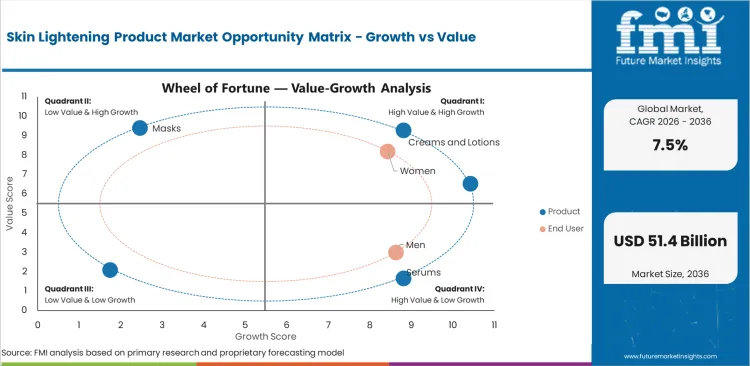
- Daily face cream use supports repeat buying as creams and lotions are projected to hold 36.0% share in 2026.
- Ingredient safety checks limit products that rely on mercury or over-the-counter hydroquinone claims.
- Serums and online channels create room for active-led products using vitamin C serums, vitamin C ingredients and niacinamide.
Safety regulation is the main restraint and the main upgrade route for suppliers. This raises compliance costs for suppliers that want wider retail access. It also creates a stronger lane for branded products built around safer active systems. Retailers can reduce risk by choosing suppliers with documented ingredient controls and plain claims. This also explains why personal care ingredient evidence matters for active selection.
Application Focus Across Face and Body Care
Application use is primarily concentrated in face care, where pigmentation and uneven tone are most visible and drive daily treatment routines. Hyperpigmentation treatment and radiance‑boosting skincare categories increasingly overlap with regular creams and serums, positioning these formats as part of everyday skincare rather than occasional correction. Body lotions represent a secondary volume route, particularly in India and Brazil, where climate, sun exposure, and mass‑market usage support broader application. Masks and peels continue to hold smaller shares due to lower usage frequency. This mix keeps creams central to volume demand while allowing serums to enhance overall market value.
Ingredient Selection and Safer Brightening Pathways
Ingredient choice is becoming a critical application filter as safety and regulatory clarity shape formulation decisions. The European Scientific Committee on Consumer Safety’s assessment of alpha arbutin and beta arbutin supports defined safe concentration limits for face creams and body lotions, giving formulators clearer alternatives to harsher brightening agents. This guidance reinforces the shift toward regulated lightening and whitening actives within cosmetic products. Plant‑based tone‑care solutions further align with this trend, with botanicals such as aloe vera extracts offering familiar, lower‑risk options for brands seeking gentler positioning.
Regional Analysis
.webp "Top Country Growth Comparison Skin Lightening Product Market Cagr (2026 2036)")
| Country | CAGR 2026 to 2036 |
|---|---|
| India | 7.4% |
| China | 7.0% |
| Brazil | 6.8% |
| Germany | 6.5% |
| South Korea | 6.4% |
| United Kingdom | 6.3% |
| United States | 5.8% |
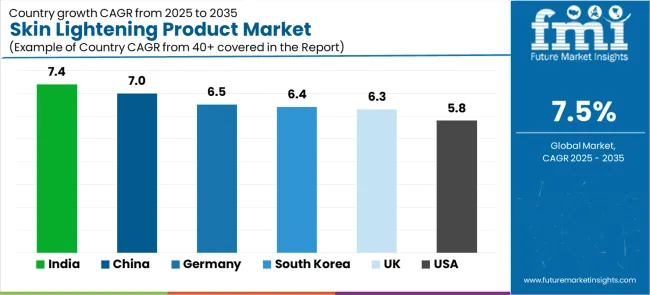
Source: Future Market Insights analysis based on skincare retail signals, public regulatory checks and supplied country inputs in 2026.
Analysis of Skin Lightening Product Market by Key Countries
- India is projected to record 7.4% CAGR through 2036 as premium actives and mass retail both support category movement.
- China is expected to expand at 7.0% CAGR through 2036 as cosmetics retail scale supports active-based skincare.
- Brazil is forecast to grow at 6.8% CAGR through 2036 with pharmacies and beauty stores supporting mass access.
- Germany is expected to advance at 6.5% CAGR through 2036 as safety-led ingredient selection shapes buying.
- South Korea is projected to rise at 6.4% CAGR through 2036 as K-beauty routines support tone-evening formats.
- United Kingdom is forecast at 6.3% CAGR through 2036 as online checks and pharmacy retail support safer products.
- United States is expected to post 5.8% CAGR through 2036 as FDA controls shift sales toward compliant brands.
Country growth differs by retail depth and ingredient regulation. India and China track above the global pace because large beauty retail systems can absorb mass and premium products. Brazil follows with strong beauty culture and pharmacy-led access. Germany, the United Kingdom and the United States grow at steadier rates as safety controls and claim checks reduce the space for informal products. South Korea stays important due to product routines and export influence.
Demand Outlook for Skin Lightening Products in India
India is projected to record 7.4% CAGR through 2036 as daily skincare and premium actives spread across modern retail. The India Brand Equity Foundation stated in February 2025 that India’s beauty and personal care sector was valued at USD 28.0 billion. That market depth gives tone-evening creams and serums a wide addressable buyer pool. Local brands also compete strongly in economy and mid-range price tiers. Suppliers that combine safe ingredients with affordable packs can gain shelf space.
- Mumbai and Delhi beauty stores favor active serums when brands explain pigmentation benefit clearly.
- Tier-two cities support economy creams as price and familiar brands guide repeat purchase.
- Online platforms such as Nykaa and Amazon India help ingredient-led brands educate buyers before trial.
Sales Analysis of Skin Lightening Products in China
China is expected to expand at 7.0% CAGR through 2036 as active skincare keeps a strong role in beauty retail. China’s National Bureau of Statistics reported cosmetics retail sales of 46.8 billion yuan in October 2024. This scale supports both domestic brands and multinational skincare lines. Buyers are selective about product claims and ingredient proof. Brands with stronger clinical language can defend premium prices.
- Shanghai and Guangzhou retailers support premium serums for dark spot and tone-evening routines.
- Domestic brands use Douyin and Tmall content to explain niacinamide and plant extract benefits.
- Hainan and cross-border beauty channels keep premium brands visible to travel and online buyers.
Demand Analysis of Skin Lightening Products in Brazil
Brazil is forecast to grow at 6.8% CAGR through 2036 as beauty routines and pharmacy retail sustain broad use. The Brazilian cosmetics association reported in January 2024 that the industry supported 144.1 thousand direct jobs in 2022. Such a wide beauty industry base supports product availability across cities and mass channels. Skin tone and sun exposure concerns keep body lotions relevant. Local brands can compete with lower pack prices and familiar ingredients.
- Sao Paulo and Rio de Janeiro beauty retailers support lotions and serums across mass shelves.
- Pharmacy chains carry brightening creams where sun care and facial care are bought together.
- Brazilian consumers often compare pack size and price which supports economy product share.
Industry Outlook for Skin Lightening Products in Germany
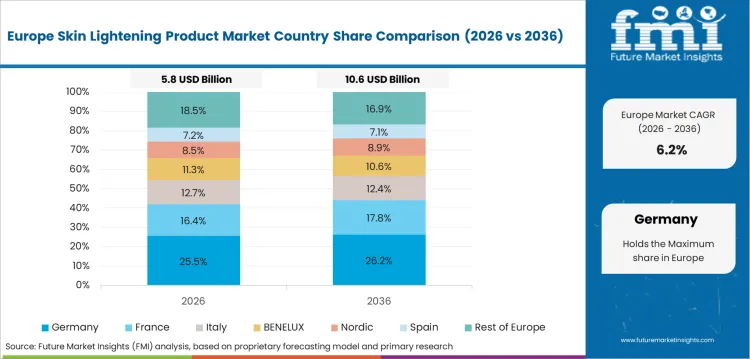
Germany is expected to advance at 6.5% CAGR through 2036 as buyers place high weight on safety and label clarity. IKW reported in its 2024 to 2025 annual review that Germans spent EUR 34.6 billion on beauty and home care products in 2024. This supports a mature but sizable route for dermatology-style products. Ingredient scrutiny favors brands with clear active levels and safety data. Premium products can grow when claims stay conservative and evidence-based.
- Drugstores such as dm and Rossmann shape access for compliant brightening creams.
- German buyers often prefer simple ingredient explanations over aggressive whitening language.
- Brands with dermatology links gain trust when products address dark spots and uneven tone.
Sales Forecast for Skin Lightening Products in South Korea
South Korea is projected to rise at 6.4% CAGR through 2036 as multi-step skincare supports tone-evening products. Korea’s cosmetics export agencies reported continued beauty export strength during 2024 and 2025. This export culture keeps active ingredients and product formats moving quickly. Domestic consumers are familiar with serums, masks and brightening claims. Suppliers that match texture, skin feel and safe ingredient stories can gain share.
- Seoul beauty districts favor serums and masks with visible tone-evening claims.
- K-beauty brands use lightweight textures to make daily brightening products easier to adopt.
- Export-focused product design supports fast refresh cycles for creams and sheet masks.
Demand Outlook for Skin Lightening Products in the United Kingdom
United Kingdom is forecast at 6.3% CAGR through 2036 as pharmacy and online channels favor safer tone-evening products. The UK Office for Product Safety and Standards expanded cosmetic compliance attention across consumer goods in 2024 and 2025. That attention supports branded products with traceable ingredients. Retailers have less tolerance for unclear whitening claims. Online reviews also make ingredient quality more visible to buyers.
- London specialty beauty stores support premium serums tied to dark spot correction.
- Pharmacy channels favor products with safe active claims and clear warnings.
- Online marketplaces increase both access and compliance checks for tone-evening products.
Industry Outlook for Skin Lightening Products in the United States
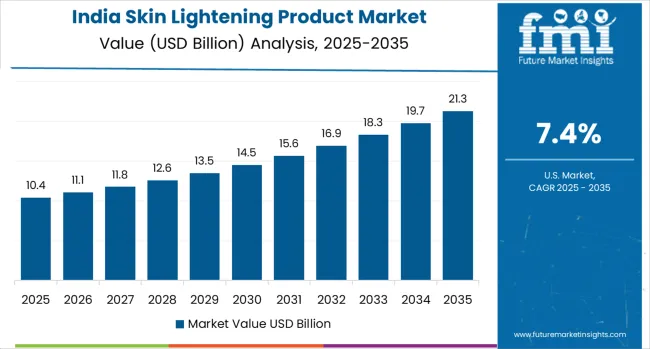
United States is expected to post 5.8% CAGR through 2036 as FDA rules reshape the market toward compliant brands. FDA stated in April 2026 that state and federal officials had found many skin lighteners containing mercury or hydroquinone. This reinforces retailer caution in the category. Prescription pathways stay separate from normal beauty shelves. Brands using vitamin C, niacinamide and plant extracts can serve mainstream skincare buyers.
- New York and Los Angeles retailers carry products aimed at uneven tone across diverse consumer groups.
- FDA enforcement makes ingredient disclosure a stronger buying filter for retail chains.
- Amazon and specialty beauty platforms reward brands that explain claims with clear ingredient pages.
Buyer Identification and Channel Structure Analysis
Buyers in this sector range from mass consumers to dermatology-aware skincare users who compare claims closely. Retail stores are projected to account for 40.0% share in 2026 while pharmacies and online channels shape trust in safer active systems. The lightening and whitening creams category shows how daily creams remain central. Serums raise basket value when shoppers want targeted spot care. Brands must support retail with simple claims and clear ingredient proof.
Channel structure is becoming more split by price and evidence. Economy products move through supermarkets and mass beauty shelves. Premium products gain through pharmacies, brand websites and specialist stores. Clear labeling can reduce purchase friction. Suppliers that align pack claims with safety rules are better placed for chain retail approvals.
Competitive Positioning and Strategic Supplier Strength
- Global Skincare Leaders: L’Oréal S.A. and Estée Lauder Companies Inc. hold broad prestige and mass skincare portfolios. L’Oréal gains from Garnier and L’Oréal Paris brightening lines. Estée Lauder gains from Clinique and Origins access in prestige skincare. These companies can support high claim discipline and wide channel reach across the United States, Europe and Asia.
- Mass and Derma Beauty Groups: Unilever PLC, Beiersdorf AG and Procter & Gamble compete with large consumer brands and broad retail reach. Beiersdorf stands out through NIVEA LUMINOUS630 and Eucerin anti-pigment systems. Unilever has strengthened its active skincare position through Minimalist and Vaseline Gluta-Hya. Procter & Gamble keeps Olay relevant in tone and spot care.
- Asian and Regional Specialists: Shiseido Company, VLCC Health Care Limited, Lotus Herbals, Clarins Group and Himalaya Global Holdings compete through regional trust and ingredient-led positioning. Shiseido has HAKU and Anessa skincare science depth. VLCC and Lotus Herbals use Indian retail reach. Himalaya and Clarins add plant-based and premium skincare credibility.
Competition outlook is influenced built around claim credibility and channel fit. Beiersdorf reported in February 2025 that its NIVEA LUMINOUS630 range achieved 34% organic growth in 2024. This shows that anti-spot products can perform well when the ingredient story is easy to understand. Unilever’s January 2025 deal for Minimalist strengthens its active skincare position in India. These moves show a shift from broad fairness language toward targeted active systems and trusted retail placement.
Large groups are also using digital access to widen skincare reach. Estée Lauder Companies launched Origins in the U.S. Amazon Premium Beauty Store in May 2025. That gives prestige skincare another route to consumers who compare ingredients online. Shiseido’s HAKU 2025 promotion focused on a tenth-generation formula for dark spot prevention. Regional players must defend price and local trust against these larger evidence-backed product systems.
Competitive Benchmarking: Skin Lightening Product Market
| Company | Pigmentation Claim Depth | Active Ingredient Portfolio | Retail Channel Reach | Geographic Footprint |
|---|---|---|---|---|
| L’Oréal S.A. | High | High | Strong | Global |
| Unilever PLC | High | Medium | Strong | Global |
| Beiersdorf AG | High | High | Strong | Global |
| Procter & Gamble Company | Medium | High | Strong | Global |
| Shiseido Company | High | High | Strong | East Asia and Global |
| Estée Lauder Companies Inc. | High | High | Strong | Global |
| VLCC Health Care Limited | Medium | Medium | Strong | India and Middle East |
| Lotus Herbals Private Limited | Medium | Medium | Moderate | India |
| Clarins Group | Medium | High | Moderate | Europe and Global |
| Himalaya Global Holdings Limited | Medium | Medium | Strong | Asia and Middle East |
Source: Future Market Insights competitive analysis, 2026. Ratings reflect relative positioning based on pigmentation claim depth, active ingredient portfolio and retail channel reach.
Key Developments in Skin Lightening Product Market
- In May 2025, Estée Lauder Companies launched Origins in the U.S. Amazon Premium Beauty Store. The move widens prestige skincare access online.
- In March 2025, Shiseido Creative promoted HAKU’s tenth-generation formula for dark spot prevention. The campaign reinforces science-led brightening in Japan.
- In August 2025, WHO sought support for legislation on mercury in skin-lightening products. This raises the compliance bar for suppliers.
Key Players in the Skin Lightening Product Market
Global Skincare Leaders
- L’Oréal S.A.
- Estée Lauder Companies Inc.
- Shiseido Company
Mass and Derma Beauty Groups
- Unilever PLC
- Beiersdorf AG
- Procter & Gamble Company
Asian and Regional Specialists
- VLCC Health Care Limited
- Lotus Herbals Private Limited
- Clarins Group
- Himalaya Global Holdings Limited
Report Scope and Coverage
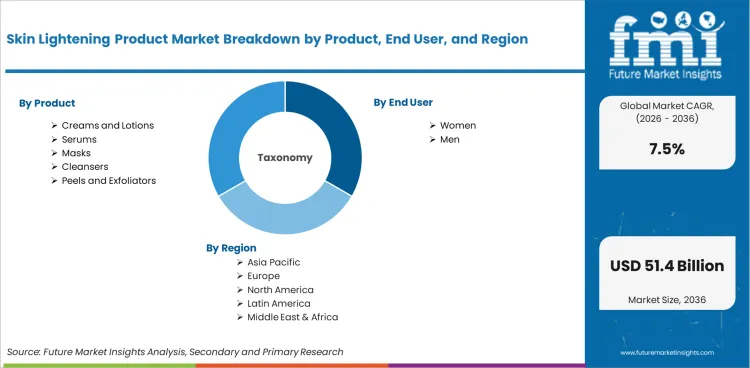
Skin Lightening Product Market Breakdown By Product, End User, Price, Distribution Channel, Ingredient Type, and Region
| Item | Value |
|---|---|
| Market value in 2025 | USD 21.6 billion |
| Market value in 2026 | USD 23.2 billion |
| Market value in 2036 | USD 47.9 billion |
| CAGR from 2026 to 2036 | 7.5% |
| Quantitative units | USD billion |
| Market definition | Topical cosmetic products sold for tone evening, dark spot care and visible brightening |
| By product | Creams and Lotions, Serums, Masks, Cleansers, Peels and Exfoliators |
| By end user | Women, Men |
| By price | Economy, Mid-Range, Premium |
| By distribution channel | Retail Stores, Pharmacies, Online Channel |
| By ingredient type | Natural Ingredients, Synthetic Ingredients, Other Ingredients |
| Regions covered | North America, Latin America, Europe, East Asia, South Asia and Pacific, Middle East and Africa |
| Countries covered | India, China, Brazil, Germany, South Korea, United Kingdom, United States, and 30+ countries |
| Key companies profiled | L’Oréal S.A., Unilever PLC, Beiersdorf AG, Procter & Gamble Company, Shiseido Company, Estée Lauder Companies Inc., VLCC Health Care Limited, Lotus Herbals Private Limited, Clarins Group, Himalaya Global Holdings Limited |
| Forecast period | 2026 to 2036 |
| Approach | Hybrid bottom-up and top-down methodology using product format shares, channel signals and country demand scoring |
Skin Lightening Product Market by Segments
Skin Lightening Product Market Segmented by Product
- Creams and Lotions
- Serums
- Masks
- Cleansers
- Peels and Exfoliators
Skin Lightening Product Market Segmented by End User
- Women
- Men
Skin Lightening Product Market Segmented by Price
- Economy
- Mid-Range
- Premium
Skin Lightening Product Market Segmented by Distribution Channel
- Retail Stores
- Pharmacies
- Online Channel
Skin Lightening Product Market Segmented by Ingredient Type
- Natural Ingredients
- Synthetic Ingredients
- Other Ingredients
Skin Lightening Product Market by Region
- North America
- United States
- Canada
- Mexico
- Latin America
- Brazil
- Chile
- Rest of Latin America
- Western Europe
- Germany
- UK
- Italy
- Spain
- France
- Nordic
- BENELUX
- Rest of Western Europe
- Eastern Europe
- Russia
- Poland
- Hungary
- Balkan and Baltic
- Rest of Eastern Europe
- East Asia
- China
- Japan
- South Korea
- South Asia and Pacific
- India
- ASEAN
- Australia and New Zealand
- Rest of South Asia and Pacific
- Middle East and Africa
- Kingdom of Saudi Arabia
- Other GCC Countries
- Turkiye
- South Africa
- Other African Union
- Rest of Middle East and Africa
Research Sources and Bibliography
- USA Food and Drug Administration. (2024, May 22). Skin product safety. FDA.
- USA Food and Drug Administration. (2026, April 2). Skin products containing mercury and/or hydroquinone. FDA.
- National Bureau of Statistics of China. (2024, November 16). Total retail sales of consumer goods in October 2024. NBS China.
- Industrieverband Koerperpflege- und Waschmittel. (2025). Annual report 2024-2025. IKW.
- Cosmetics Europe. (2025, June). Annual report 2024. Cosmetics Europe.
- Hindustan Unilever Limited. (2025, January 22). HUL to acquire premium beauty brand Minimalist. Unilever.
- Beiersdorf AG. (2025, February 27). Beiersdorf outperforms skin care market. Beiersdorf.
- The Estée Lauder Companies. (2025, May 16). Origins launches in the USA Amazon Premium Beauty Store. ELC.
- Shiseido Creative. (2025, March 10). HAKU 2025 SS promotion. Shiseido Creative.
- European Commission Scientific Committee on Consumer Safety. (2023, January 31). Opinion on the safety of alpha-arbutin and beta-arbutin in cosmetic products. European Commission.
The bibliography is provided for reader reference and direct source checking. Sources include primary regulatory, government, official company and trade body publications.
This Report Addresses
- How large is the skin lightening product market in 2026 and how far can it rise by 2036?
- What CAGR is projected for the skin lightening product market from 2026 to 2036?
- Which product format is projected to hold the strongest share in 2026?
- Which end user and distribution channel shape most skin lightening product purchases?
- Why are natural ingredients expected to lead ingredient type demand in 2026?
- How do mercury and hydroquinone rules affect product claims and supplier strategy?
- Which countries are forecast to grow fastest across the skin lightening product market?
- Which companies hold the strongest positions in global and regional skincare channels?
- What products are included and excluded in this market definition?
- How does FMI size and validate the forecast for this sector?
Frequently Asked Questions
What is the global market demand for Skin Lightening Product Market in 2026?
In 2026, the global Skin Lightening Product Market is expected to be worth USD 23.2 billion with daily skincare supporting repeat use.
What will the Skin Lightening Product Market be worth by 2036?
The Skin Lightening Product Market is forecast to reach USD 47.9 billion by 2036 as safer tone-evening products gain use.
What CAGR is projected for the Skin Lightening Product Market from 2026 to 2036?
The Skin Lightening Product Market is expected to expand at 7.5% CAGR from 2026 to 2036 across creams and serums.
Which product segment leads the Skin Lightening Product Market?
Creams and Lotions are projected to account for 36.0% share in 2026 as daily application supports repeat buying.
Which distribution channel leads the Skin Lightening Product Market?
Retail Stores are projected to account for 40.0% share in 2026 with supermarkets and beauty stores supporting product access.
Which country grows fastest in the Skin Lightening Product Market?
India is projected to record 7.4% CAGR through 2036 as mass skincare and active-based products spread across retail channels.
What does the Skin Lightening Product Market include?
The market includes topical creams, lotions, serums, masks, cleansers and peels sold for tone evening and dark spot care.
How is the Skin Lightening Product Market forecast prepared?
FMI uses supplied market anchors, public source checks, product format shares and country demand scoring to test the forecast.
How should buyers choose a skin lightening product safely?
Buyers should check the ingredient list first and avoid mercury or over-the-counter hydroquinone products. Safer choices usually use niacinamide, vitamin C, arbutin or plant extracts.
Are skin lightening creams different from brightening serums?
Creams are used daily for broader tone care and moisture. Serums carry higher active levels and are often bought for dark spots or targeted pigmentation.
Why are natural ingredients important in skin lightening products?
Natural ingredients matter because buyers are cautious about harsh bleaching agents. Plant extracts, licorice and aloe vera can support softer product claims.
Which channels are best for buying skin lightening products?
Retail stores remain useful for repeat buying and price comparison. Pharmacies and brand websites are better when buyers want clearer ingredient details.
Do skin lightening products work the same for every user?
Results differ by skin type, cause of pigmentation and product use pattern. Products aimed at tone evening usually need steady use and safe sun care support.
Preview the report firsthand - request a free sample
Get SampleGet the brochure for pricing and purchase details.
Get PDFTable of Content
- Executive Summary
- Global Market Outlook
- Demand-side Trends
- Supply-side Trends
- Technology Roadmap Analysis
- Analysis and Recommendations
- Market Overview
- Market Coverage / Taxonomy
- Market Definition / Scope / Limitations
- Research Methodology
- Chapter Orientation
- Analytical Lens and Working Hypotheses
- Market Structure, Signals, and Trend Drivers
- Benchmarking and Cross-market Comparability
- Market Sizing, Forecasting, and Opportunity Mapping
- Research Design and Evidence Framework
- Desk Research Programme (Secondary Evidence)
- Company Annual and Sustainability Reports
- Peer-reviewed Journals and Academic Literature
- Corporate Websites, Product Literature, and Technical Notes
- Earnings Decks and Investor Briefings
- Statutory Filings and Regulatory Disclosures
- Technical White Papers and Standards Notes
- Trade Journals, Industry Magazines, and Analyst Briefs
- Conference Proceedings, Webinars, and Seminar Materials
- Government Statistics Portals and Public Data Releases
- Press Releases and Reputable Media Coverage
- Specialist Newsletters and Curated Briefings
- Sector Databases and Reference Repositories
- FMI Internal Proprietary Databases and Historical Market Datasets
- Subscription Datasets and Paid Sources
- Social Channels, Communities, and Digital Listening Inputs
- Additional Desk Sources
- Expert Input and Fieldwork (Primary Evidence)
- Primary Modes
- Qualitative Interviews and Expert Elicitation
- Quantitative Surveys and Structured Data Capture
- Blended Approach
- Why Primary Evidence is Used
- Field Techniques
- Interviews
- Surveys
- Focus Groups
- Observational and In-context Research
- Social and Community Interactions
- Stakeholder Universe Engaged
- C-suite Leaders
- Board Members
- Presidents and Vice Presidents
- R&D and Innovation Heads
- Technical Specialists
- Domain Subject-matter Experts
- Scientists
- Physicians and Other Healthcare Professionals
- Governance, Ethics, and Data Stewardship
- Research Ethics
- Data Integrity and Handling
- Primary Modes
- Tooling, Models, and Reference Databases
- Desk Research Programme (Secondary Evidence)
- Data Engineering and Model Build
- Data Acquisition and Ingestion
- Cleaning, Normalisation, and Verification
- Synthesis, Triangulation, and Analysis
- Quality Assurance and Audit Trail
- Market Background
- Market Dynamics
- Drivers
- Restraints
- Opportunity
- Trends
- Scenario Forecast
- Demand in Optimistic Scenario
- Demand in Likely Scenario
- Demand in Conservative Scenario
- Opportunity Map Analysis
- Product Life Cycle Analysis
- Supply Chain Analysis
- Investment Feasibility Matrix
- Value Chain Analysis
- PESTLE and Porter’s Analysis
- Regulatory Landscape
- Regional Parent Market Outlook
- Production and Consumption Statistics
- Import and Export Statistics
- Market Dynamics
- Global Market Analysis 2021 to 2025 and Forecast, 2026 to 2036
- Historical Market Size Value (USD billion) Analysis, 2021 to 2025
- Current and Future Market Size Value (USD billion) Projections, 2026 to 2036
- Y-o-Y Growth Trend Analysis
- Absolute $ Opportunity Analysis
- Global Market Pricing Analysis 2021 to 2025 and Forecast 2026 to 2036
- Global Market Analysis 2021 to 2025 and Forecast 2026 to 2036, By Product
- Introduction / Key Findings
- Historical Market Size Value (USD billion) Analysis By Product , 2021 to 2025
- Current and Future Market Size Value (USD billion) Analysis and Forecast By Product , 2026 to 2036
- Creams and Lotions
- Serums
- Masks
- Cleansers
- Peels and Exfoliators
- Creams and Lotions
- Y-o-Y Growth Trend Analysis By Product , 2021 to 2025
- Absolute $ Opportunity Analysis By Product , 2026 to 2036
- Global Market Analysis 2021 to 2025 and Forecast 2026 to 2036, By End User
- Introduction / Key Findings
- Historical Market Size Value (USD billion) Analysis By End User, 2021 to 2025
- Current and Future Market Size Value (USD billion) Analysis and Forecast By End User, 2026 to 2036
- Women
- Men
- Women
- Y-o-Y Growth Trend Analysis By End User, 2021 to 2025
- Absolute $ Opportunity Analysis By End User, 2026 to 2036
- Global Market Analysis 2021 to 2025 and Forecast 2026 to 2036, By Price
- Introduction / Key Findings
- Historical Market Size Value (USD billion) Analysis By Price, 2021 to 2025
- Current and Future Market Size Value (USD billion) Analysis and Forecast By Price, 2026 to 2036
- Economy
- Mid-Range
- Premium
- Economy
- Y-o-Y Growth Trend Analysis By Price, 2021 to 2025
- Absolute $ Opportunity Analysis By Price, 2026 to 2036
- Global Market Analysis 2021 to 2025 and Forecast 2026 to 2036, By Distribution Channel
- Introduction / Key Findings
- Historical Market Size Value (USD billion) Analysis By Distribution Channel, 2021 to 2025
- Current and Future Market Size Value (USD billion) Analysis and Forecast By Distribution Channel, 2026 to 2036
- Retail Stores
- Pharmacies
- Online Channel
- Retail Stores
- Y-o-Y Growth Trend Analysis By Distribution Channel, 2021 to 2025
- Absolute $ Opportunity Analysis By Distribution Channel, 2026 to 2036
- Global Market Analysis 2021 to 2025 and Forecast 2026 to 2036, By Ingredient Type
- Introduction / Key Findings
- Historical Market Size Value (USD billion) Analysis By Ingredient Type, 2021 to 2025
- Current and Future Market Size Value (USD billion) Analysis and Forecast By Ingredient Type, 2026 to 2036
- Natural Ingredients
- Synthetic Ingredients
- Other Ingredients
- Natural Ingredients
- Y-o-Y Growth Trend Analysis By Ingredient Type, 2021 to 2025
- Absolute $ Opportunity Analysis By Ingredient Type, 2026 to 2036
- Global Market Analysis 2021 to 2025 and Forecast 2026 to 2036, By Region
- Introduction
- Historical Market Size Value (USD billion) Analysis By Region, 2021 to 2025
- Current Market Size Value (USD billion) Analysis and Forecast By Region, 2026 to 2036
- North America
- Latin America
- Western Europe
- Eastern Europe
- East Asia
- South Asia and Pacific
- Middle East & Africa
- Market Attractiveness Analysis By Region
- North America Market Analysis 2021 to 2025 and Forecast 2026 to 2036, By Country
- Historical Market Size Value (USD billion) Trend Analysis By Market Taxonomy, 2021 to 2025
- Market Size Value (USD billion) Forecast By Market Taxonomy, 2026 to 2036
- By Country
- USA
- Canada
- Mexico
- By Product
- By End User
- By Price
- By Distribution Channel
- By Ingredient Type
- By Country
- Market Attractiveness Analysis
- By Country
- By Product
- By End User
- By Price
- By Distribution Channel
- By Ingredient Type
- Key Takeaways
- Latin America Market Analysis 2021 to 2025 and Forecast 2026 to 2036, By Country
- Historical Market Size Value (USD billion) Trend Analysis By Market Taxonomy, 2021 to 2025
- Market Size Value (USD billion) Forecast By Market Taxonomy, 2026 to 2036
- By Country
- Brazil
- Chile
- Rest of Latin America
- By Product
- By End User
- By Price
- By Distribution Channel
- By Ingredient Type
- By Country
- Market Attractiveness Analysis
- By Country
- By Product
- By End User
- By Price
- By Distribution Channel
- By Ingredient Type
- Key Takeaways
- Western Europe Market Analysis 2021 to 2025 and Forecast 2026 to 2036, By Country
- Historical Market Size Value (USD billion) Trend Analysis By Market Taxonomy, 2021 to 2025
- Market Size Value (USD billion) Forecast By Market Taxonomy, 2026 to 2036
- By Country
- Germany
- UK
- Italy
- Spain
- France
- Nordic
- BENELUX
- Rest of Western Europe
- By Product
- By End User
- By Price
- By Distribution Channel
- By Ingredient Type
- By Country
- Market Attractiveness Analysis
- By Country
- By Product
- By End User
- By Price
- By Distribution Channel
- By Ingredient Type
- Key Takeaways
- Eastern Europe Market Analysis 2021 to 2025 and Forecast 2026 to 2036, By Country
- Historical Market Size Value (USD billion) Trend Analysis By Market Taxonomy, 2021 to 2025
- Market Size Value (USD billion) Forecast By Market Taxonomy, 2026 to 2036
- By Country
- Russia
- Poland
- Hungary
- Balkan & Baltic
- Rest of Eastern Europe
- By Product
- By End User
- By Price
- By Distribution Channel
- By Ingredient Type
- By Country
- Market Attractiveness Analysis
- By Country
- By Product
- By End User
- By Price
- By Distribution Channel
- By Ingredient Type
- Key Takeaways
- East Asia Market Analysis 2021 to 2025 and Forecast 2026 to 2036, By Country
- Historical Market Size Value (USD billion) Trend Analysis By Market Taxonomy, 2021 to 2025
- Market Size Value (USD billion) Forecast By Market Taxonomy, 2026 to 2036
- By Country
- China
- Japan
- South Korea
- By Product
- By End User
- By Price
- By Distribution Channel
- By Ingredient Type
- By Country
- Market Attractiveness Analysis
- By Country
- By Product
- By End User
- By Price
- By Distribution Channel
- By Ingredient Type
- Key Takeaways
- South Asia and Pacific Market Analysis 2021 to 2025 and Forecast 2026 to 2036, By Country
- Historical Market Size Value (USD billion) Trend Analysis By Market Taxonomy, 2021 to 2025
- Market Size Value (USD billion) Forecast By Market Taxonomy, 2026 to 2036
- By Country
- India
- ASEAN
- Australia & New Zealand
- Rest of South Asia and Pacific
- By Product
- By End User
- By Price
- By Distribution Channel
- By Ingredient Type
- By Country
- Market Attractiveness Analysis
- By Country
- By Product
- By End User
- By Price
- By Distribution Channel
- By Ingredient Type
- Key Takeaways
- Middle East & Africa Market Analysis 2021 to 2025 and Forecast 2026 to 2036, By Country
- Historical Market Size Value (USD billion) Trend Analysis By Market Taxonomy, 2021 to 2025
- Market Size Value (USD billion) Forecast By Market Taxonomy, 2026 to 2036
- By Country
- Kingdom of Saudi Arabia
- Other GCC Countries
- Turkiye
- South Africa
- Other African Union
- Rest of Middle East & Africa
- By Product
- By End User
- By Price
- By Distribution Channel
- By Ingredient Type
- By Country
- Market Attractiveness Analysis
- By Country
- By Product
- By End User
- By Price
- By Distribution Channel
- By Ingredient Type
- Key Takeaways
- Key Countries Market Analysis
- USA
- Pricing Analysis
- Market Share Analysis, 2025
- By Product
- By End User
- By Price
- By Distribution Channel
- By Ingredient Type
- Canada
- Pricing Analysis
- Market Share Analysis, 2025
- By Product
- By End User
- By Price
- By Distribution Channel
- By Ingredient Type
- Mexico
- Pricing Analysis
- Market Share Analysis, 2025
- By Product
- By End User
- By Price
- By Distribution Channel
- By Ingredient Type
- Brazil
- Pricing Analysis
- Market Share Analysis, 2025
- By Product
- By End User
- By Price
- By Distribution Channel
- By Ingredient Type
- Chile
- Pricing Analysis
- Market Share Analysis, 2025
- By Product
- By End User
- By Price
- By Distribution Channel
- By Ingredient Type
- Germany
- Pricing Analysis
- Market Share Analysis, 2025
- By Product
- By End User
- By Price
- By Distribution Channel
- By Ingredient Type
- UK
- Pricing Analysis
- Market Share Analysis, 2025
- By Product
- By End User
- By Price
- By Distribution Channel
- By Ingredient Type
- Italy
- Pricing Analysis
- Market Share Analysis, 2025
- By Product
- By End User
- By Price
- By Distribution Channel
- By Ingredient Type
- Spain
- Pricing Analysis
- Market Share Analysis, 2025
- By Product
- By End User
- By Price
- By Distribution Channel
- By Ingredient Type
- France
- Pricing Analysis
- Market Share Analysis, 2025
- By Product
- By End User
- By Price
- By Distribution Channel
- By Ingredient Type
- India
- Pricing Analysis
- Market Share Analysis, 2025
- By Product
- By End User
- By Price
- By Distribution Channel
- By Ingredient Type
- ASEAN
- Pricing Analysis
- Market Share Analysis, 2025
- By Product
- By End User
- By Price
- By Distribution Channel
- By Ingredient Type
- Australia & New Zealand
- Pricing Analysis
- Market Share Analysis, 2025
- By Product
- By End User
- By Price
- By Distribution Channel
- By Ingredient Type
- China
- Pricing Analysis
- Market Share Analysis, 2025
- By Product
- By End User
- By Price
- By Distribution Channel
- By Ingredient Type
- Japan
- Pricing Analysis
- Market Share Analysis, 2025
- By Product
- By End User
- By Price
- By Distribution Channel
- By Ingredient Type
- South Korea
- Pricing Analysis
- Market Share Analysis, 2025
- By Product
- By End User
- By Price
- By Distribution Channel
- By Ingredient Type
- Russia
- Pricing Analysis
- Market Share Analysis, 2025
- By Product
- By End User
- By Price
- By Distribution Channel
- By Ingredient Type
- Poland
- Pricing Analysis
- Market Share Analysis, 2025
- By Product
- By End User
- By Price
- By Distribution Channel
- By Ingredient Type
- Hungary
- Pricing Analysis
- Market Share Analysis, 2025
- By Product
- By End User
- By Price
- By Distribution Channel
- By Ingredient Type
- Kingdom of Saudi Arabia
- Pricing Analysis
- Market Share Analysis, 2025
- By Product
- By End User
- By Price
- By Distribution Channel
- By Ingredient Type
- Turkiye
- Pricing Analysis
- Market Share Analysis, 2025
- By Product
- By End User
- By Price
- By Distribution Channel
- By Ingredient Type
- South Africa
- Pricing Analysis
- Market Share Analysis, 2025
- By Product
- By End User
- By Price
- By Distribution Channel
- By Ingredient Type
- USA
- Market Structure Analysis
- Competition Dashboard
- Competition Benchmarking
- Market Share Analysis of Top Players
- By Regional
- By Product
- By End User
- By Price
- By Distribution Channel
- By Ingredient Type
- Competition Analysis
- Competition Deep Dive
- L’Oréal S.A.
- Overview
- Product Portfolio
- Profitability by Market Segments (Product/Age /Sales Channel/Region)
- Sales Footprint
- Strategy Overview
- Marketing Strategy
- Product Strategy
- Channel Strategy
- Unilever PLC
- Beiersdorf AG
- Procter & Gamble Company
- Shiseido Company
- Estée Lauder Companies Inc.
- VLCC Health Care Limited
- Lotus Herbals Private Limited
- Clarins Group
- Himalaya Global Holdings Limited
- L’Oréal S.A.
- Competition Deep Dive
- Assumptions & Acronyms Used


